
6 Connectivity Mistakes That Make Programmatic and Direct Ads Under-Deliver
Cy
If your programmatic DOOH or direct-sold campaigns are under-delivering, the culprit is often not the creative, the bid, or the daypart. It is the invisible connectivity layer that keeps screens “live” on dashboards while ads stall, proof-of-play gaps appear, and revenue leaks.
For operators of DOOH, retail media, and other ad revenue-generating networks, connectivity is the heartbeat. When a screen drops, ads freeze, data stops, and revenue halts. Yet many networks still treat connectivity as a set-and-forget utility instead of a core revenue driver. Below are six common connectivity mistakes that quietly break real-time bidding (RTB), direct schedulers, and proof-of-play integrity, as well as make stable, independent connectivity matter at every screen.
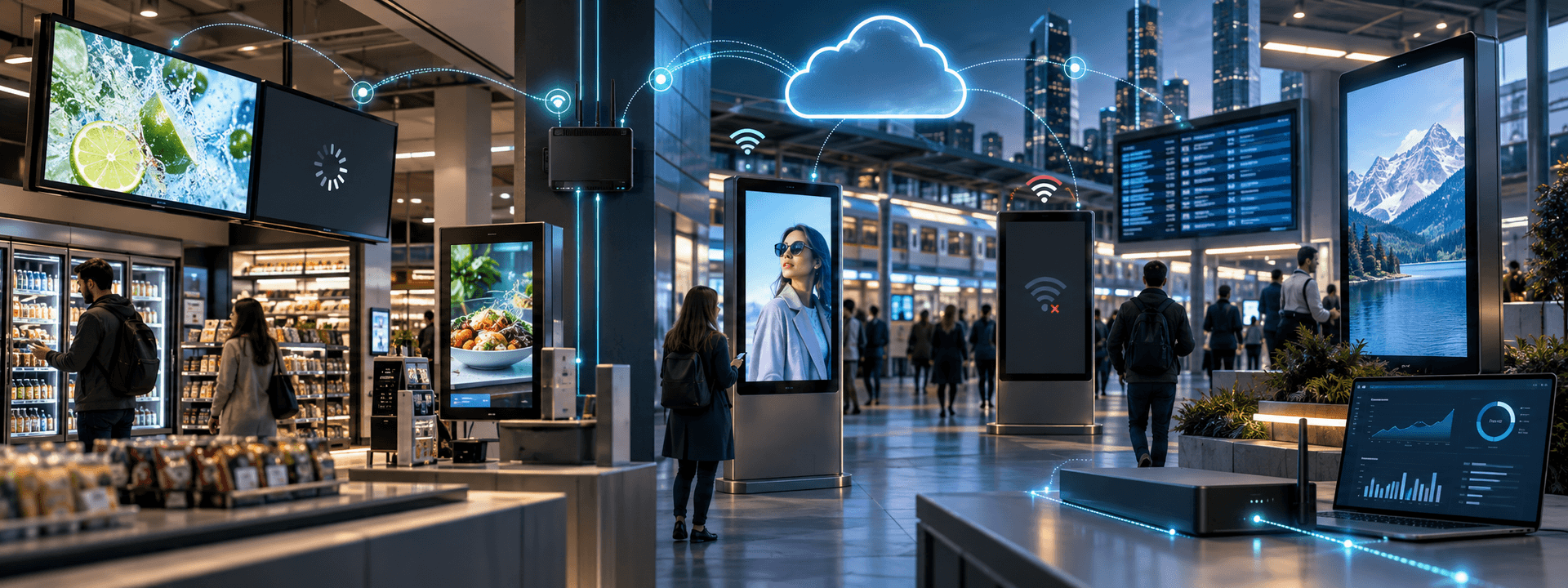
1. Depending on Venue Wi‑Fi or Shared Networks as the Primary Path
Many networks launch with the simplest path: plug into the venue’s Wi‑Fi or share the host’s internet. It works during the pilot. Then the venue changes the Wi‑Fi password, reboots the router, adds new POS devices, or prioritizes guest traffic over signage.
For programmatic and direct campaigns, this shows up as:
- Intermittent “live” status in the CMS while content fails to refresh.
- Missed dynamic triggers (weather, traffic, audience) that rely on timely data.
- Proof-of-play logs that arrive late or incomplete, creating gaps in reporting.
Venue networks were built for people and POS, not for always-on, revenue-generating screens. When connectivity is shared, ad delivery competes with everything else on that network. In programmatic DOOH, uptime is a quality gate: screens generally must hold above the ~95% uptime threshold that most DSP quality configurations use, or they stop attracting bids.
Stable connectivity matters for every vertical, from transit and QSR to fuel, pharmacy, and fitness, because every screen is a revenue node. When connectivity wobbles, the network under-delivers as a whole. The payoff is consistent performance across the estate.
2. Treating “Online” Device Status as Proof the Ad Is Running
A device can be online while the ad experience is broken. Generic MDM or basic device dashboards often confirm that a player is powered and connected, but they cannot verify what is actually displayed.
This creates the classic “screen offline but looks on” scenario:
- The player shows green in the dashboard.
- The last cached playlist keeps looping.
- New campaigns, updates, and dynamic triggers never land.
- Proof-of-play data is stale or missing, so campaigns appear to under-deliver even though the screen “looks fine.”
For programmatic buyers and direct advertisers, this gap between device status and on-screen output is critical. Network performance is measured by on-screen output, not device status. Operators need proof-of-play that includes screenshots, playback logs, and audit trails that validate campaign delivery, not just a heartbeat that says the box is powered. The payoff is proof that ads actually ran.
When connectivity is unstable, players may keep playing old content indefinitely while appearing healthy. Without visibility into what is actually on-screen, operators cannot explain delivery gaps to advertisers or protect yield. The payoff is fewer disputes and stronger yield protection.
3. Letting Latency and Packet Loss Break Real-Time Bidding and Triggers
Programmatic DOOH relies on timely communication between screens, SSPs, DSPs, and data providers. Even when a screen is technically “up,” high latency, jitter, or packet loss can break the flow:
- Bid requests time out before the auction completes.
- Dynamic triggers (foot traffic, weather, inventory levels) arrive too late to influence the impression.
- Content updates and playlist changes queue but do not apply in time for the scheduled slot.
This is especially painful for networks that sell on performance:
- Advertisers see lower effective impression counts.
- Triggers appear unreliable, so buyers reduce bids or pause campaigns.
- Proof-of-play timestamps drift, making reconciliation harder.
Latency and packet loss often come from congested venue networks, oversubscribed cellular links, or routers without proper traffic prioritization. For ad revenue-generating networks, connectivity must be engineered for low-latency, consistent throughput, and graceful recovery, as it is not just “some connection.”
4. Running Single-Carrier, Single-Link Setups With No Failover
Many networks deploy with one carrier and one link per screen. It keeps costs simple until a tower goes down, a fibre cut happens, or a venue’s ISP has an outage. Then entire clusters of screens drop at once.
In programmatic and direct-sold environments, this looks like:
- Sudden, location-based under-delivery that correlates with carrier or ISP incidents.
- Campaigns that hit daily caps in some markets and miss them in others, with no clear pattern.
- Proof-of-play gaps that align with known network outages but are hard to explain to advertisers.
A screen that drops mid-campaign under-delivers, as the advertiser paid for impressions that did not run. For networks that monetize uptime, single-link architectures turn normal infrastructure events into revenue events.
Multi-carrier, multi-link designs with automatic failover are now table stakes for serious DOOH and retail media networks. The goal is not just redundancy; it is consistent availability so that every screen remains bid-eligible and schedule-compliant. The payoff is resilience that keeps campaigns live.
5. Ignoring Data-Plan Design and Throttling Behavior
DOOH content flows are bursty: playlists and creatives push in bursts, while heartbeats, health data, and proof-of-play run continuously in the background. If data plans are too small, throttled, or poorly structured, operators see:
- Content updates delayed until off-peak hours.
- Proof-of-play uploads queued or dropped during throttling windows.
- Dynamic campaigns that cannot fetch fresh data when needed.
Some networks also run into issues when:
- Plans are structured per device without pooling, making it hard to balance usage across the estate.
- Carriers throttle after certain thresholds, silently degrading performance instead of cutting off outright.
- Overage charges force operators to restrict updates, which then impacts delivery.
For programmatic and direct campaigns, this shows up as inconsistent performance by location or time of day. Advertisers notice that some screens always deliver while others seem flaky, even though the hardware and CMS are identical. The difference is often the data plan and how it interacts with real-world usage patterns. The payoff is more even delivery across locations.
Right-sizing the data plan matters. DOOH content is mostly cached and updated periodically, not streamed continuously, so data use is manageable if the architecture caches well. But that only works when the plan and the player behavior are aligned.
6. Lacking Heartbeat Monitoring and Fast Recovery Processes
Even well-designed networks experience blips: power cycles, router reboots, firmware updates, and venue changes. The difference between a minor blip and a revenue-impacting outage is often monitoring and response.
Common gaps include:
- No heartbeat monitoring per player, so outages are discovered days later by an advertiser or host.
- Dashboards that show device status but not proof-of-display telemetry (whether the screen is actually on and showing content).
- No fast, known process to recover a dark screen (remote reboot, host call, dispatch), so outages stretch from minutes to days.
In programmatic DOOH, a screen that drops offline does not just miss plays, as it falls below the quality bar and stops attracting demand. For direct-sold networks, the same screen becomes a liability during audits and renewals.
Operators need:
- Heartbeat monitoring where every player reports in and a missed heartbeat triggers an alert before the host or advertiser notices.
- Proof-of-display telemetry that confirms the screen is on and showing content, not just that the player is powered.
- Fast response workflows so outages are measured in minutes, not days.
This is not about blaming infrastructure teams. It is about recognizing that connectivity monitoring and recovery are part of the revenue engine, not just IT hygiene. The payoff is treating recovery as revenue protection.
Why Stable Connectivity Matters Beyond CPG Brands
A lot of DOOH conversation centers on CPG campaigns and big retail media networks. But stable connectivity is critical for every revenue-generating screen, regardless of vertical or campaign type:
- Transit and fuel networks rely on timely content for promotions, safety messages, and partner ads.
- QSR and restaurant screens depend on menu accuracy, dayparting, and localized offers.
- Pharmacy, fitness, and service-based networks use screens for education, upsell, and partner messaging.
- Smart vending, kiosk, and ATM-adjacent screens blend transactions with ad content, where downtime affects both sales and media.
When connectivity is unstable, all of these use cases suffer:
- Dynamic content stops reflecting real-world conditions.
- Proof-of-play becomes unreliable, complicating advertiser reporting and renewals.
- Networks lose yield because screens drop below quality thresholds or miss scheduled slots.
For operators, the question is not whether connectivity matters. It is whether the network is engineered to protect revenue at every screen, every day. The payoff is sustained revenue at scale.
The Invisible Layer Behind “Live” Screens
Programmatic DOOH is not delivering. Direct ad campaigns are under-delivering. Screen is offline but looks on. These are common operator queries because the connectivity layer is invisible until it breaks.
Latency, packet loss, intermittent drops, and silent throttling break RTB and direct schedulers in ways that look like bidding or creative problems but are actually delivery infrastructure problems. Technical outages or connectivity problems at the screen level reduce actual ad plays versus what the platform projects, and that gap can look like a bidding problem when it is actually a connectivity issue.
For DOOH, retail media, and ad revenue-generating networks, connectivity is not a back-office detail. It is a core product attribute that determines:
- Whether screens remain bid-eligible in programmatic marketplaces.
- Whether direct-sold campaigns hit their contracted impression counts.
- Whether proof-of-play data is complete, timely, and audit-ready.
Operators who treat connectivity as a strategic layer, with independent links, multi-carrier resilience, proper data-plan design, and real monitoring, see fewer delivery gaps, cleaner reporting, and more reliable revenue.
About CyberCentra
CyberCentra is a niche provider focused on revenue-generating DOOH, retail media, and distributed networks. We specialize in managed connectivity, router management, cybersecurity, and uptime for screen and IoT estates where every minute offline is revenue lost.