
5 Reasons Failover Connectivity Is Insurance for Screen Networks
Digital screen networks power advertising, menus, promotions, wayfinding, and real-time brand experiences. Whether deployed in retail locations, kiosks, transit hubs, or outdoor environments, screens are expected to stay online and display content without interruption.
Yet outages remain one of the most common and costly challenges for screen operators. When screens go offline, it’s rarely due to content or creative issues. In most cases, the root cause is connectivity, and more specifically, the lack of redundancy.
This is where screen failover connectivity becomes critical. Failover connectivity acts as insurance for screen networks. It doesn’t prevent every issue from occurring, but it ensures screens stay online when problems inevitably arise. Below are the five most important reasons why failover connectivity is essential for reliable screen operations.
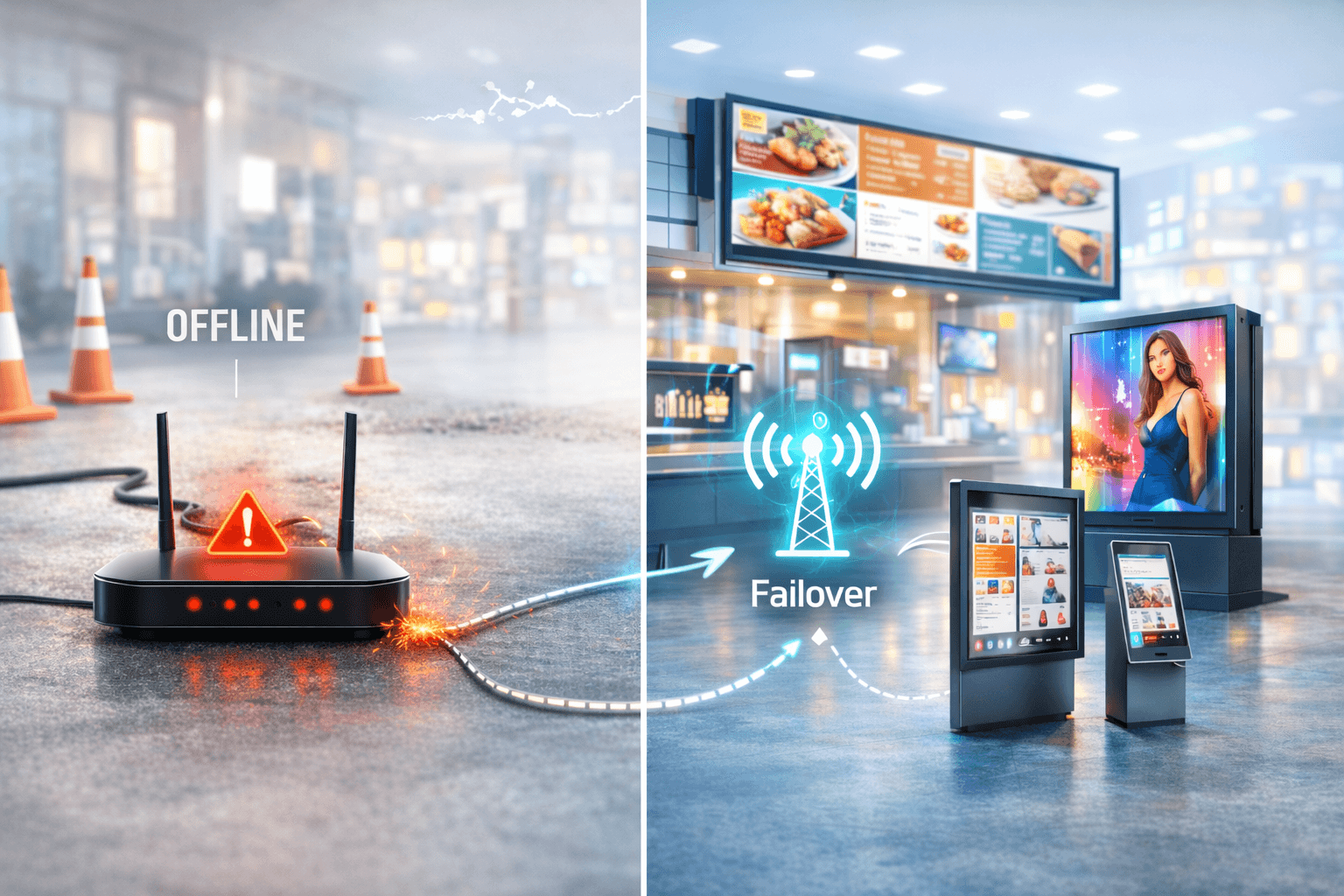
1. Single-Point-of-Failure Risk
The most common connectivity mistake screen networks make is relying on a single internet connection. When a network relies on a single connection--whether Wi-Fi, wired broadband, or cellular--it creates a single point of failure, if that connection fails, the screen immediately goes offline. Single-point-of-failure setups are risky because:
- Internet disruptions are unpredictable
- Failures often occur outside business hours
- Resolution timelines are rarely guaranteed
- Operators have little control over third-party outages
Even well-maintained networks experience failures. Routers reboot. ISPs have outages. Configurations change without warning. When there’s no backup connection, downtime becomes unavoidable.
Screen failover connectivity removes this risk by ensuring there is always an alternate path to the internet. If the primary connection drops, traffic automatically shifts to the backup connection without manual intervention. This design principle is standard in mission-critical infrastructure, and screens should be treated the same way.
2. Temporary ISP Outages Are More Common Than Most Teams Realize
Internet service providers rarely offer 100% uptime, even on business plans. Short-term outages happen frequently and often go unreported until users complain. Common ISP-related issues include:
- Neighborhood-wide outages
- DNS failures
- Regional maintenance windows
- Routing problems
- Throttling during peak usage
These outages may last minutes or hours, but even brief disruptions can take screens offline long enough to:
- Miss scheduled ad rotations
- Interrupt live campaigns
- Cause blank or frozen displays
- Trigger service-level agreement issues
Without screen failover connectivity, operators must wait for the ISP to resolve the issue, often without a clear timeline.
With failover in place, screens remain online while the primary ISP connection is restored in the background. This ensures continuity without requiring immediate action from support teams.
3. Router Failures Can Take Entire Locations Offline
Routers and modems are often overlooked until something goes wrong. In many deployments, consumer-grade or lightly managed routers are used to reduce upfront costs. Unfortunately, routers are a frequent point of failure. Common router-related issues include:
- Hardware degradation over time
- Firmware bugs or failed updates
- Power interruptions
- Overheating or environmental damage
- Configuration errors
When a router fails, everything connected to it goes offline, including screens. If the router requires a manual reboot or replacement, downtime can extend for hours or even days.
Failover connectivity mitigates this risk by allowing screens to bypass the failed router and connect through an alternate network. In some setups, failover also allows operators to diagnose issues remotely, reducing the need for emergency site visits and minimizing disruption.
4. Construction-Related Downtime Is an Invisible Threat
One of the most underestimated causes of screen downtime is construction. Roadwork, building renovations, and utility maintenance frequently disrupt internet infrastructure. Fibre lines get cut. Cabling is rerouted. Service is temporarily suspended without warning. These issues are especially common in:
- Urban retail corridors
- New developments
- Transit areas
- Shopping centers are undergoing upgrades
When construction-related outages occur, ISP repair times are often unpredictable. Operators may be told service will be restored “later today” or “within 24–48 hours,” with little visibility into progress. Without screen-failover connectivity, screens remain offline during the outage.
Failover provides a critical safety net, allowing screens to stay online while construction issues are resolved. This is particularly important for advertising-supported networks where downtime directly impacts revenue and partner relationships.
5. Buying Time Instead of Scrambling
One of the most valuable benefits of screen failover connectivity is the ability to buy time. Without failover, every outage becomes an emergency. Teams scramble to identify the problem, contact vendors, dispatch technicians, and communicate with stakeholders, all while screens remain offline. This reactive approach leads to:
- Stressful troubleshooting
- Higher support costs
- Unplanned site visits
- Damaged client trust
Failover connectivity changes the dynamic entirely. When a primary connection fails and screens stay online through a backup connection, operators gain time to:
- Diagnose issues calmly
- Schedule repairs instead of rushing
- Coordinate with ISPs and vendors
- Avoid unnecessary truck rolls
- Maintain consistent performance
Failover isn’t about avoiding every problem. It’s about preventing small issues from turning into major disruptions.
Why Screen Failover Connectivity Is an Investment, Not an Expense
Some screen operators hesitate to implement failover connectivity due to perceived cost; however, the cost of downtime often far exceeds the cost of redundancy. Downtime can result in:
- Lost ad impressions
- Lost payment transactions
- Missed campaign commitments
- Refunds or penalties
- Brand reputation damage
- Increased operational overhead
Screen failover connectivity acts as insurance by reducing financial risk and protecting uptime. It ensures screens remain functional even when parts of the network fail. As screen networks grow, failover becomes more important. What may seem unnecessary at five screens becomes critical at fifty or five hundred.
Designing Failover Connectivity the Right Way
Effective failover connectivity requires more than simply adding a backup connection. Key considerations include:
- Automatic switching without manual intervention
- Proper hardware configuration
- Monitoring and alerts
- Clear ownership of connectivity
Failover should be seamless, reliable, and invisible to end users. When designed correctly, screens continue operating without interruption, even during network disruptions.
Final Thoughts: Screens Deserve Reliable Infrastructure
Digital screens are not accessories. They are infrastructure. They generate revenue, deliver brand experiences, and support business operations. Treating connectivity as an afterthought puts all of that at risk.
Screen failover connectivity provides the resilience that screen networks need to operate reliably in real-world conditions, where outages, failures, and disruptions are inevitable.
The most successful screen networks plan for failure before it happens. Failover connectivity is how they ensure screens stay online, campaigns stay live, and operations stay predictable.