
6 Reasons Your Screens Can Still Be Hijacked (Even With “Secure” Hardware)
Digital screens are no longer simple displays. They’re connected systems that rely on the internet to deliver ads, menus, pricing, and real-time content across many locations.
As screen networks grow, so does their exposure. Many operators assume that once they’ve purchased “good hardware”--solid screens, reliable routers, and locked-down enclosures--their network is secure. Unfortunately, that assumption is wrong. Screen hijacking rarely happens because hardware is missing. It happens because hardware alone doesn’t address how modern screen networks actually operate.
Below are six real, common reasons screens get hijacked and why physical hardware alone isn’t enough to prevent it.
1. Screens Are Always Connected — That’s the Risk
The biggest advantage of digital screens is also the biggest risk: they are always online.
Screens constantly communicate with:
- Content management systems (CMS)
- Cloud dashboards
- Update servers
- Analytics platforms
- Remote operators
This constant connectivity creates multiple access points, not just one. Even with strong physical hardware:
- Network traffic still flows in and out
- Credentials are still used
- Updates still happen remotely
If access isn’t properly controlled, attackers don’t need physical access to a screen. They only need a digital path in.
Hardware protects the device. Security must protect the connection and access.
2. CMS Logins Are Often the Weakest Link
Most screen hijacking incidents don’t start at the screen itself. They start at the CMS. Common CMS-related issues include:
- Shared logins across teams
- Reused or weak passwords
- Old employee or contractor access not removed
- Logins used across multiple platforms
When a CMS account is compromised, attackers can:
- Change displayed content
- Redirect screens to external sites
- Lock operators out
- Shut screens down entirely
No amount of hardware security prevents this. If the CMS is exposed, the screen is exposed, regardless of how secure the physical device is.
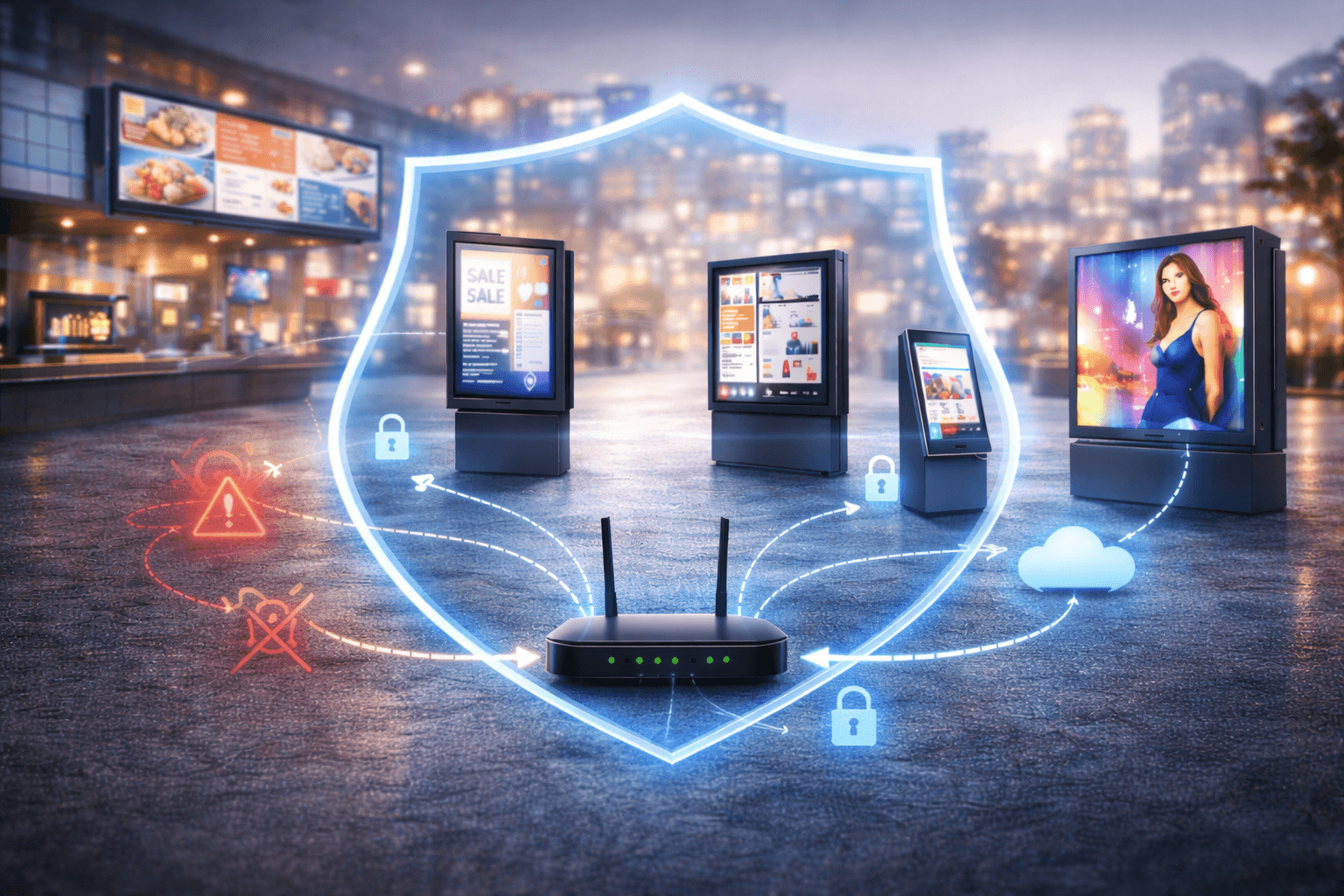
3. Networks Aren’t Segmented (Everything Talks to Everything)
In many deployments, screens are placed on the same network as:
- Guest Wi-Fi
- Staff devices
- POS systems
- Security cameras
- Printers and tablets
This creates unnecessary risk. If one device on the network is compromised, screens can become reachable indirectly.
Network segmentation--separating screens from unrelated devices--is a software and configuration decision, not a hardware one. Even the best hardware can’t protect screens if:
- They share open networks
- Traffic isn’t restricted
- Access isn’t controlled
Security depends on how devices are connected, not just what devices are used.
4. Remote Access Is Convenient, and Dangerous Without Controls
Remote access is essential for modern screen networks. Operators need to:
- Update content
- Troubleshoot issues
- Reboot devices
- Monitor uptime
But unmanaged remote access is a significant risk. Common problems include:
- Open remote ports
- Outdated remote tools
- Access enabled “temporarily” and never disabled
- Third-party vendors retaining access indefinitely
These access points don’t disappear just because the hardware is solid. Security requires:
- Controlled remote access
- Logging and visibility
- Defined permissions
Without these controls, attackers don’t need to touch the hardware at all.
5. Updates and Patches Don’t Apply Themselves
Hardware doesn’t stay secure on its own. Screens, routers, and CMS platforms all require:
- Firmware updates
- Software patches
- Security fixes over time
When updates are delayed or skipped:
- Known vulnerabilities remain open
- Attackers can exploit documented weaknesses
- Systems drift out of compliance
This is especially common in large networks where:
- Updates are manual
- No one “owns” security maintenance
- Stability is prioritized over patching
Good hardware is only secure when it’s updated. Security is an ongoing process, not a one-time purchase.
6. Screen Hijacking Often Goes Unnoticed Until It’s Public
One of the most damaging aspects of screen hijacking is how quietly it can happen. In many cases:
- Screens appear “online”
- Systems don’t raise alerts
- Issues aren’t detected immediately
Hijacking may only be noticed when:
- A customer reports strange content
- An employee sees something inappropriate
- A photo shows up on social media
By then, the damage is already done.
Hardware doesn’t monitor behavior. Security systems and policies do. Visibility, monitoring, and alerts are critical, and they live beyond the physical device.
Why Hardware Alone Can’t Solve Screen Security
Hardware is important. It provides:
- Stability
- Performance
- Physical protection
But security lies in how systems are accessed, managed, and monitored. Proper screen security requires:
- Controlled CMS access
- Network segmentation
- Managed remote access
- Ongoing updates
- Visibility into abnormal behavior
Without these layers, even the best hardware can’t prevent hijacking.
What “Securing Screens” Actually Means
For screen networks, security isn’t about making things complicated. It’s about:
- Reducing unnecessary access
- Knowing who can change what
- Limiting blast radius when something goes wrong
- Catching issues early
This applies whether you manage:
- 10 screens
- 50 screens
Or hundreds across regions. As networks grow, the impact of a single security failure grows with them.
Final Takeaway: Security Is a System, Not a Device
Screen hijacking isn’t rare. It’s just underreported. Most incidents don’t happen because operators ignored security; they happen because security was assumed to be “handled” by hardware alone. In reality:
- Hardware is the foundation
- Security is the structure built on top
Protecting screens requires thinking beyond devices and focusing on how screens connect, authenticate, update, and operate every day. That’s how screen networks stay online, trusted, and protected.